An HC licence is not a general permission for every large truck or every trailer arrangement. In Western Australia, a Heavy Combination licence covers a prime mover with one attached semi-trailer, or an HR vehicle towing a trailer with a gross vehicle mass (GVM) above 9,000 kg. The practical starting point is the vehicle configuration, not its appearance or the freight it carries.
If you are wondering “what can you drive with HC licence”, separate the question into three parts: the towing vehicle, the attached trailers and any restrictions on your licence. That gives you a useful way to compare a prospective driving role with the licence you hold or the training you are considering.
The Core HC Configuration: A Prime Mover And One Semi-Trailer
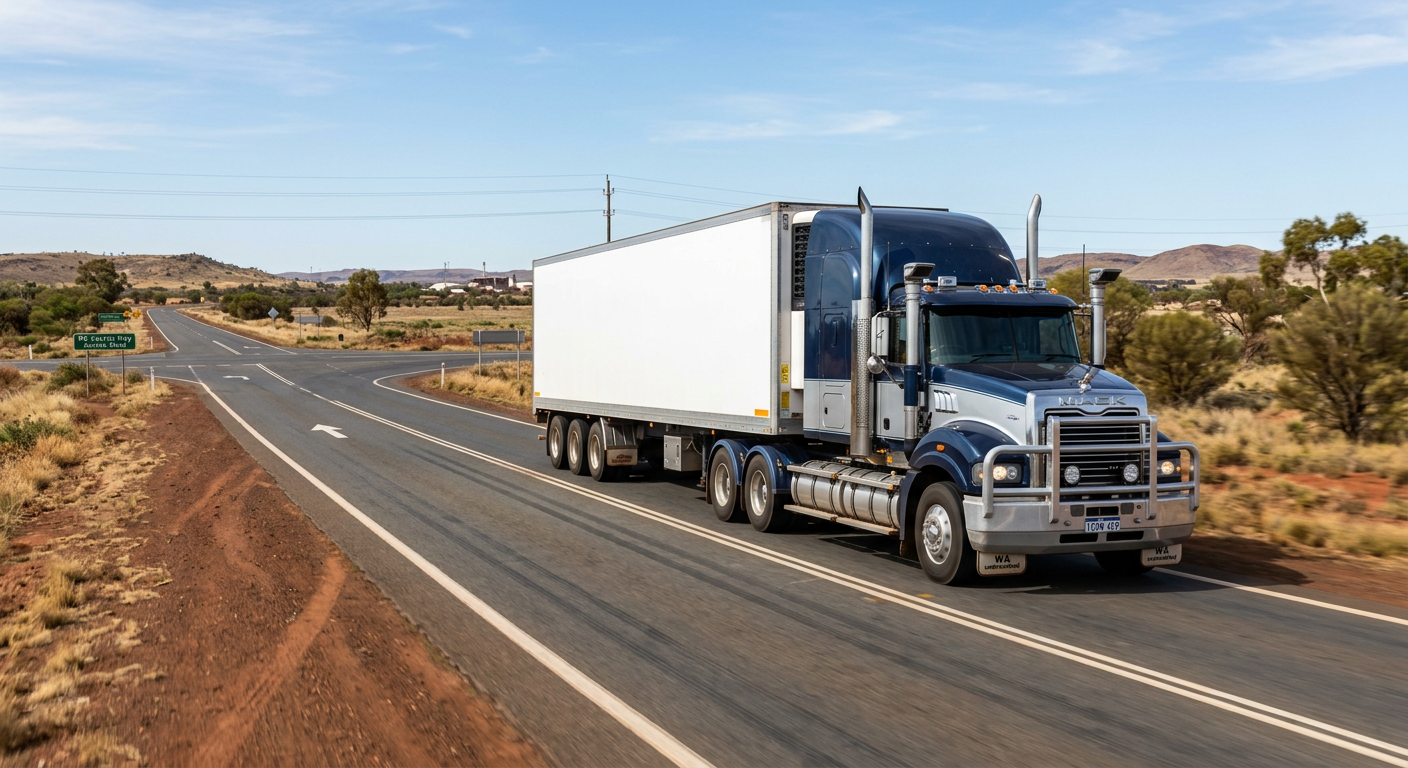
An HC licence authorises a prime mover with one attached semi-trailer. This is the first configuration many drivers have in mind when they ask about a Heavy Combination licence. For someone considering this type of work, that description is a much more precise starting point than a broad phrase such as “large truck driving”.
The word “one” does useful work here. It identifies the central single-semi-trailer configuration without extending the entitlement to every possible combination.
HC Also Covers An HR Vehicle With A Heavier Trailer
The second main HC configuration is an HR vehicle towing a trailer with a GVM above 9,000 kg. This differs from the prime-mover-and-semi-trailer example, but it is also within HC scope. A driver comparing the two arrangements should not assume that a rigid towing vehicle necessarily means an HR licence will be sufficient.
The threshold is the trailer’s gross vehicle mass, not an impression that the trailer is long, heavily loaded or commercially used. In this part of the HC definition, the trailer’s GVM must be greater than 9,000 kg. The distinction between “greater than” and “up to” matters when you are reading a vehicle specification close to that figure.
A written vehicle description helps keep those details together. Include the towing vehicle’s class, whether the attached unit is a semi-trailer, the total number of trailers and the stated GVM of each. You can then use the official HC definition to compare the arrangement with the class wording, particularly where an additional trailer or dolly is involved.
The Lower Classes Remain Included
An HC licence also authorises HR, MR, LR, car and moped vehicles. This is downward class coverage: holding HC includes those listed vehicle categories. It can be useful when thinking about work that involves different vehicles, but the inclusion should not be mistaken for unrestricted permission to drive any vehicle in any circumstances.
Licence restrictions and conditions still apply. The vehicle class and the conditions on your licence answer different questions: one identifies the category of vehicle, while the other can limit how or what you may drive. Treat both as part of the same decision, especially when a prospective vehicle has a different transmission from the one you normally use.
One Additional Trailer Can Be Permitted
HC also permits one other trailer, in addition to the attached trailer or semi-trailer, with a maximum GVM of 9,000 kg. The class wording separately permits an unladen converter dolly or low loader dolly. These provisions explain why a simple “one trailer equals HC, two trailers equals MC” rule would be misleading.
For example, an additional trailer specified at exactly 9,000 kg GVM is within the stated maximum for that additional trailer; one specified above 9,000 kg is outside that allowance. This comparison concerns the additional-trailer provision only. It does not establish that every other feature of a proposed combination fits HC, which is why the whole arrangement matters.
With our HC training at Blue Horse Truck Driver Training, we teach safe driving techniques, systematic control of vehicle functions and monitoring of traffic and road conditions. The course also addresses managing vehicle condition and performance and responding to hazardous situations. These learning areas give your vehicle choice a practical purpose: identifying the combination is the starting point, while developing the skills to control it and respond to changing conditions is the training task.
Where HC Stops And MC Begins
An MC licence covers a heavy combination unit towing two or more trailers, each with a GVM above 9,000 kg. The words “each” and “above” are important. They distinguish this configuration from the HC allowance for one additional trailer with a maximum GVM of 9,000 kg.
For a vehicle that falls within that MC description, our MC training is the relevant course pathway to discuss. The distinction is not simply a preference between two courses: the intended combination determines which class is relevant. Choosing HC because it is the next course you had in mind would leave the underlying vehicle-class question unanswered.
Transmission Restrictions Still Matter
An A restriction limits the holder to vehicles fitted with automatic transmission. A B restriction permits automatic or synchromesh transmission only. These limits are separate from the HC vehicle configuration, so a combination can fit the class description while its gearbox remains outside a particular driver’s permitted transmission range.
For example, an automatic-only restriction does not disappear because the vehicle has one semi-trailer. Removing an A restriction requires passing a practical driving assessment in a vehicle fitted with manual transmission; removing a B restriction requires passing one in a vehicle fitted with a non-synchromesh gearbox. The licence restrictions guide explains these requirements and the codes shown on the back of your licence.
We generally conduct HC and MC training in an automatic vehicle. If your intended work involves a different transmission, make that part of the training discussion before choosing a course. Being precise about the gearbox is more useful than describing a licence as simply “HC”, because the class name alone does not communicate every restriction.
A Licence Class Is Not Every Operational Permission
The class definition tells you which vehicle categories the licence covers; it should not be treated as approval for every route, load or individual vehicle. Keep those operational questions separate when evaluating work. A discussion about whether HC is the right class is useful, but it is not a complete decision about everything a particular driving task involves.
The same distinction applies to personal licence conditions. For example, an S condition requires the holder to wear corrective lenses at all times while driving. Meeting the HC configuration and transmission requirements does not cancel that obligation. A class upgrade changes the vehicle entitlement, not the need to follow applicable conditions on the licence.
How Our HC Course Fits The Vehicle Decision
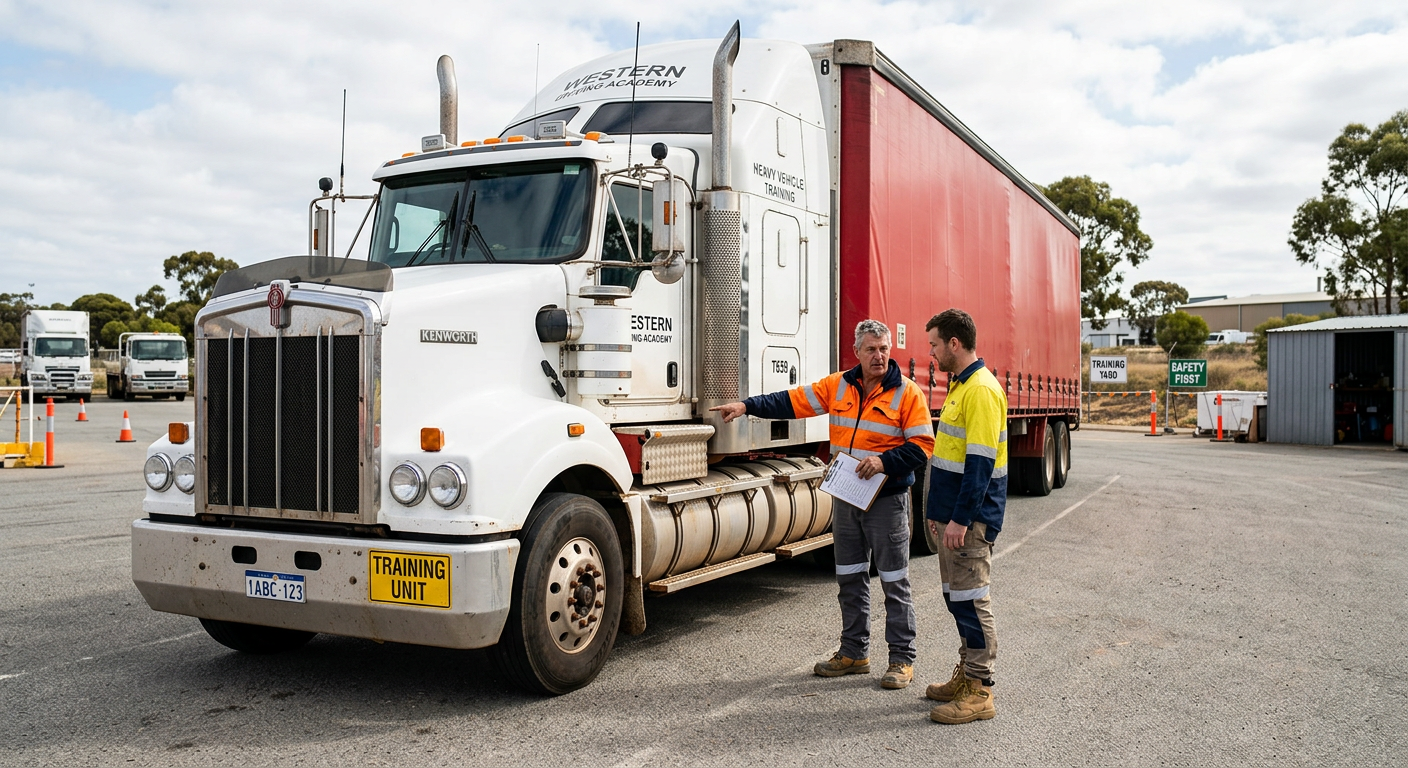
Our HC course covers TLIC3005 Drive Heavy Combination Vehicle and includes two days of one-on-one training. Successful completion of TLIC3005 leads to a Statement of Attainment and eligibility to undertake the Practical Driving Assessment (PDA), subject to licensing eligibility. The training certificate does not replace the driving assessment.
After passing a PDA through an approved RTO, you must visit a DTMI service centre or regional agent to have your licence endorsed before you are authorised to drive the heavy vehicle. Leave room for that final step in your planning. Completing training, passing the driving assessment and obtaining the licence endorsement are distinct milestones.
Prepare A Vehicle-Focused Enquiry
For an HC upgrade, you must not be a provisional licence holder and must have held a car licence for at least three years, plus an MR or HR licence for at least one year. Those holding periods are separate from the vehicle question. Identifying an HC combination does not, by itself, establish that you are eligible to upgrade immediately.
Our student information brings together upgrade guidance and student policies. It also provides access to the student handbook, cancellation policy and fees, charges and refund policy. These resources help you understand the enrolment side of training once you have identified the vehicle class relevant to your goal.
Before training and assessment through an RTO, eligibility must be verified using the Licence Assessment Provider System (LAPS). You need to complete and sign the Heavy Vehicle PDA Customer Eligibility form, E114, and pass a commercial vehicle eyesight test. The RTO also confirms eligibility on the day of the PDA; an expired licence, for example, makes you ineligible for that assessment.
You can speak with us about the combination you want to drive and how your existing licence fits the course. Have your vehicle description and licence details ready for that conversation.


Leave A Comment