

A useful truck licence training checklist starts with the details that matter before you arrive: your intended licence class, licence history, enrolment information, Unique Student Identifier and anything that could affect safe participation. Getting these items in order gives you a clearer starting point for the theory and practical components of our course.
To prepare for truck driving course activities, separate the paperwork from the learning preparation. First, organise the information needed for enrolment and eligibility. Then consider how you will follow instructions, complete English-language work and participate in practical training. Keep a short written list of anything unresolved so it does not get lost among booking messages and everyday commitments.
1. Match The Course To Your Licence History
Start with your current licence class and the dates you obtained each relevant class. For HR, you must not be a provisional licence holder and must have held a C-class licence for at least two years, or an LR or MR licence for at least one year. Our HR enrolment requirements also specify a minimum age of 18. Record the actual holding dates, not just the year you first started driving.
For HC, you must not be a provisional licence holder and must have held a C-class licence for at least three years and an MR or HR licence for at least one year. For MC, the experience requirements are a C-class licence held for at least three years and an HR or HC licence held for at least one year. These are different pathways: an MR licence is not the qualifying heavy vehicle class for an MC upgrade.
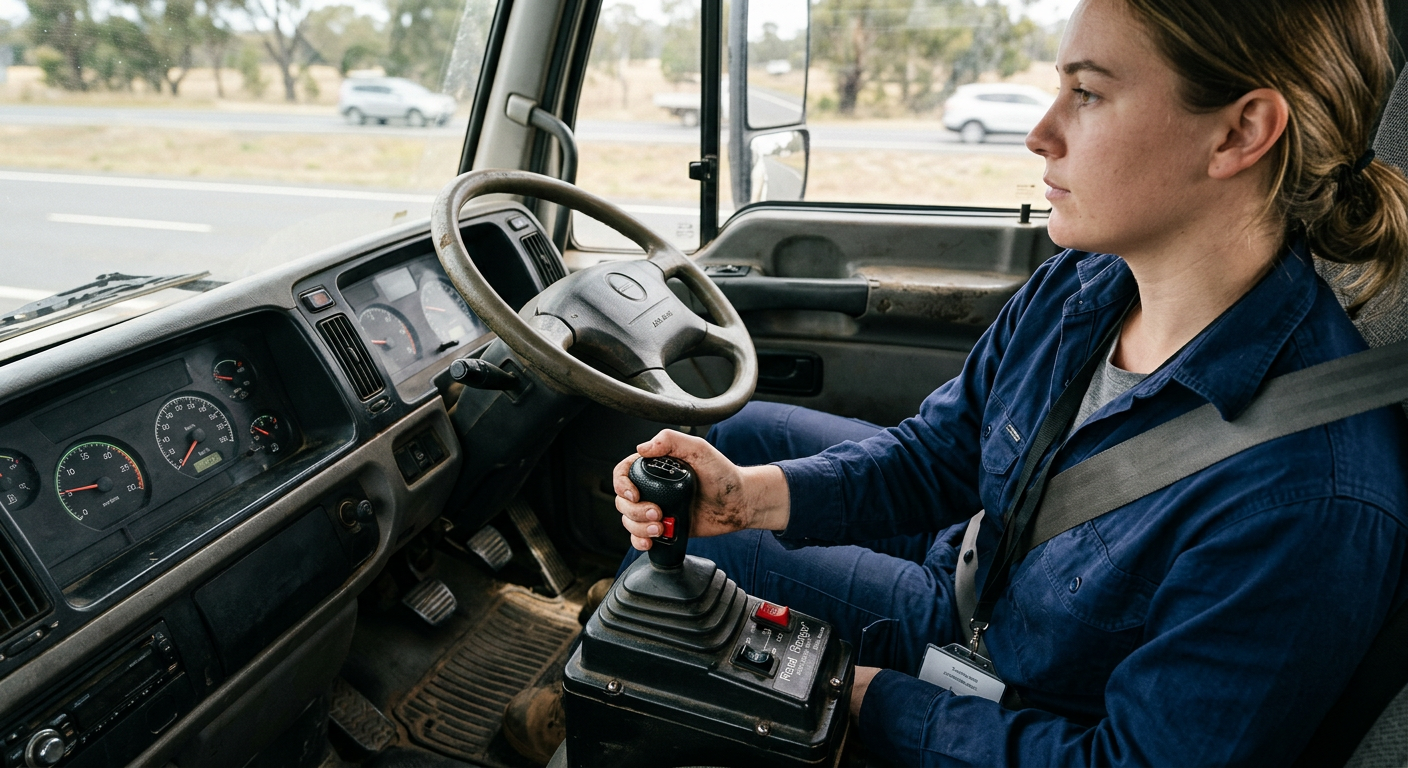
Transmission choice also deserves attention before booking. Our HR training is available in Automatic, Synchromesh and Road Ranger. Write down the option you intend to learn, especially if an employer has mentioned a particular gearbox. A licence class and a transmission option answer different questions, so avoid treating “manual truck training” as a complete description of what you need.
2. Understand The Eligibility Paperwork
For training and assessment through an RTO, eligibility involves more than calculating holding periods yourself. Under the official RTO assessment requirements, the RTO must verify eligibility through the Licence Assessment Provider System, or LAPS. You need to complete and sign the Heavy Vehicle PDA Customer Eligibility form, E114, and pass a commercial vehicle eyesight test.
The declarations matter too. Training and assessment will not proceed if you fail the eyesight test, do not declare your commercial-standard medical eligibility, or do not declare an alcohol interlock condition or restriction; you will be referred to DTMI. If you wear glasses or contact lenses for driving, our course requirements specify that you must wear them for the eyesight test. Include these in your practical preparation instead of leaving them in another vehicle or bag.
Eligibility is checked again on the day of the Practical Driving Assessment, or PDA, and an expired licence can make you ineligible. Passing the PDA is also not the final authorisation to drive the upgraded class: you must visit a DTMI service centre or regional agent to have your licence endorsed. Keep enrolment, course assessment, the PDA and licence endorsement as separate milestones in your planning.
3. Have Your USI And Enrolment Details Ready
All our students must have a valid Unique Student Identifier before commencing training, and we cannot issue a Statement of Attainment without a verified USI. Locate your existing USI before the course and keep it somewhere you can retrieve it easily. This belongs alongside your enrolment preparation, not on a list of things to sort out after training.
Provide accurate personal information during enrolment. Read through what you submit, paying attention to spelling and any details copied from earlier paperwork. Our student handbook brings together the USI, enrolment and participation requirements, so it is useful preparation reading before your course. Keep your booking information and outstanding tasks together, with completed items clearly marked.
4. Raise Health And Participation Needs Early
During enrolment, declare medical or health conditions that may affect your ability to participate safely in training. Some conditions may need to be disclosed to the Department of Transport, and further medical clearance may be required. Our course requirements ask you to disclose a medical condition, restriction or disability that may affect training before confirming your booking.
This is not an invitation to self-diagnose your eligibility or predict an outcome. Describe the practical difficulty and its effect on participation. For example, make a note of what you need explained or what activity concerns you, so the conversation is specific. Early disclosure allows the appropriate process to be addressed without making your first practical session the starting point for an unresolved health discussion.
5. Prepare For English-Language Learning
Our trainers at Blue Horse Truck Driver Training speak English, Punjabi and Hindi, but all reading, writing and assessment tasks are conducted in English. We require basic to intermediate English skills, including the ability to understand instructions and participate actively in theory and practical training. Think about those particular tasks when considering your readiness, not only your confidence in everyday conversation.
A useful preparation exercise is to read an instruction carefully, explain its meaning in your own words and identify anything unfamiliar. Keep a small list of terms you want explained. The aim is not to memorise answers before learning the subject; it is to notice where reading or understanding instructions takes extra effort, so you can describe the support you need.
Our handbook identifies the Reading Writing Hotline for information about local language, literacy and numeracy services, and Read Write Now in WA for adult tutoring support. Our student support may also include one-on-one assistance, additional time or clarification, and referral to external services. Raise support needs during enrolment or early in training so the discussion relates to the work you will actually undertake.
6. Know What Your Course Involves
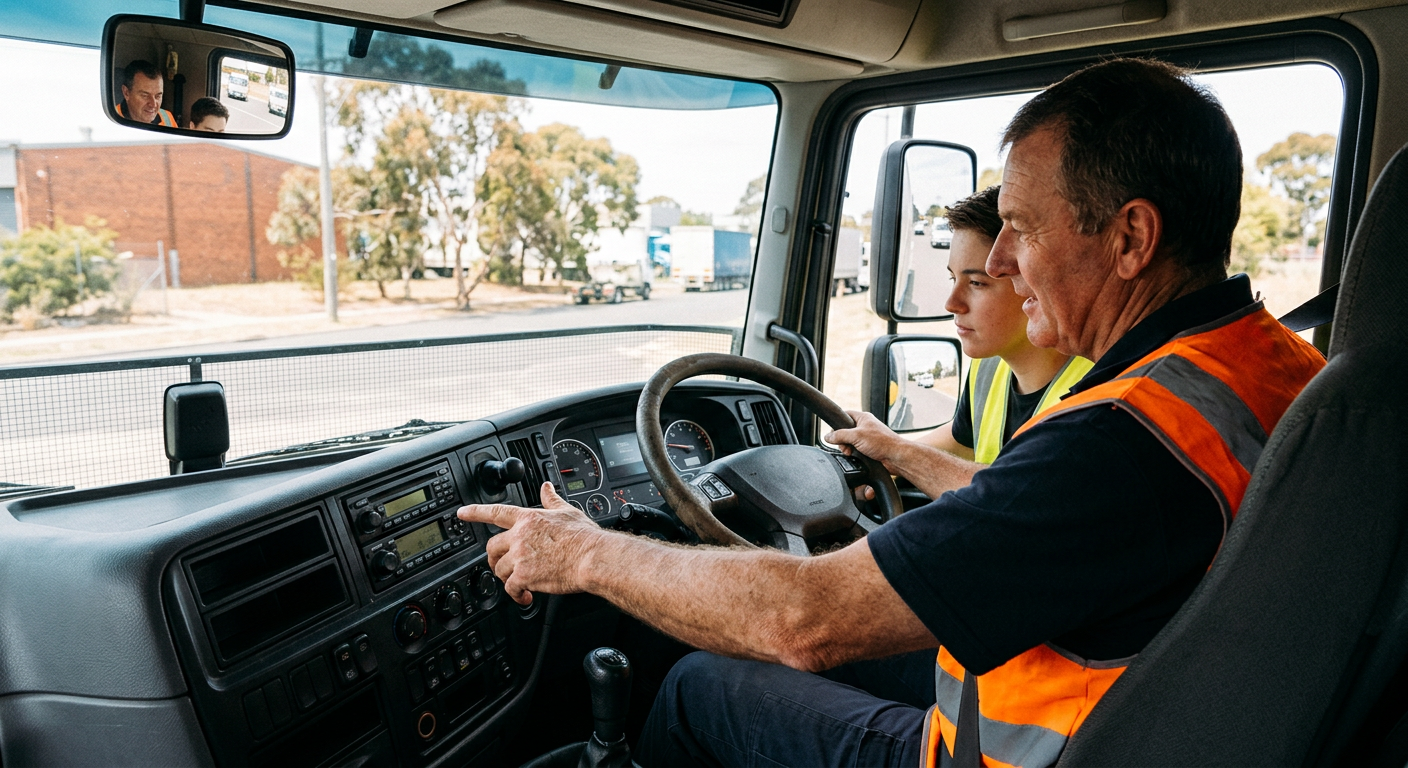
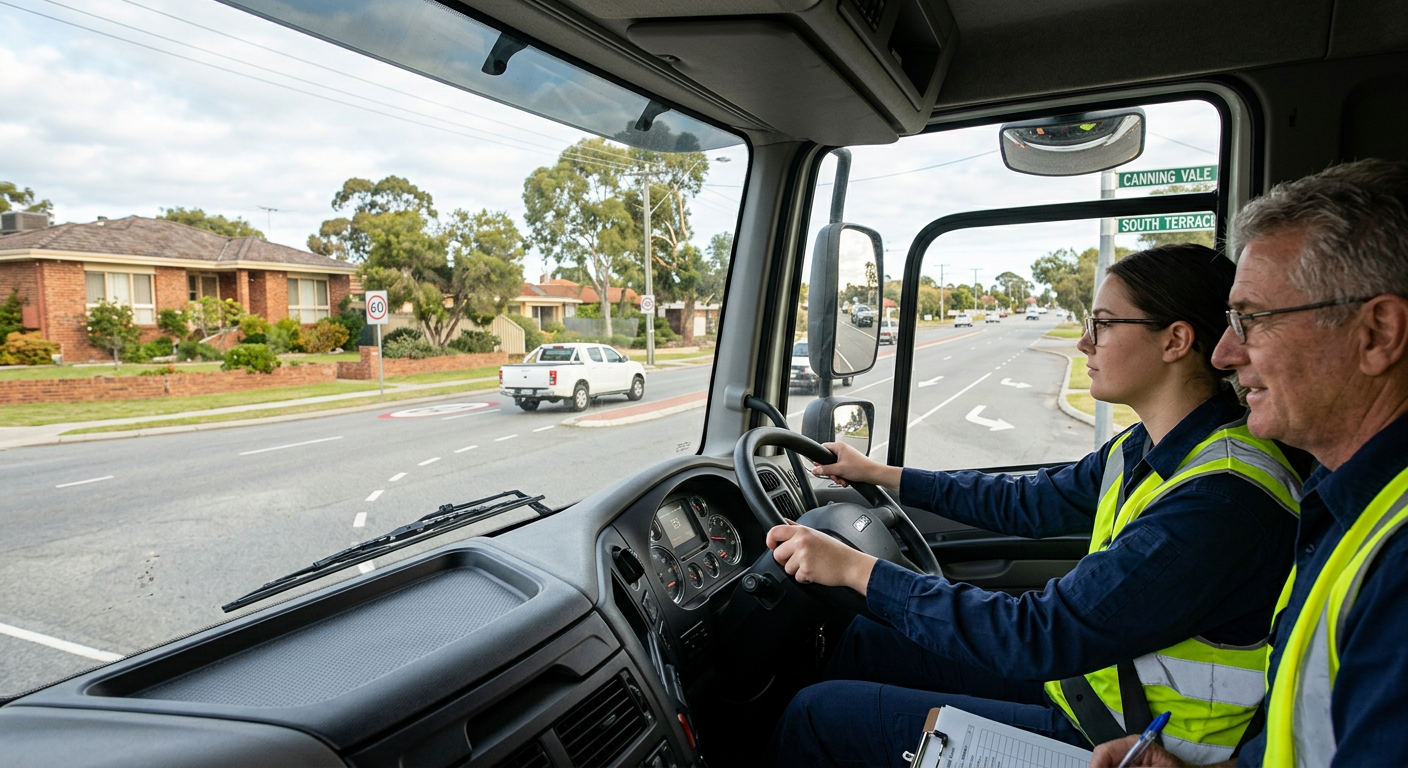
Our course delivery combines one-on-one instruction, an online open-book theory assessment, and practical on-road training and assessment. Practical activities may include preparing to drive, managing acceleration and braking, steering, changing gears, coordinating controls, reversing and manoeuvring. Preparation therefore needs to cover both concentrated learning and hands-on vehicle work.
Open-book does not mean there is nothing to learn. When studying, practise finding relevant information and understanding how it answers the question. For practical learning, approach each instruction as something to understand before carrying it out. If a direction is unclear, seek clarification before acting. These habits keep your attention on the task instead of on trying to appear confident.
Set aside the sessions shown in your booking and organise travel around your booked start time. We require regular attendance and punctuality; late arrival may reduce allocated training time, affect other students and affect your ability to complete the course. Published business hours are not your personal appointment time. Use the booking details to organise work commitments and other responsibilities around attendance.
7. Dress For Practical Activity
Wear comfortable, practical clothing suitable for training activities, including closed-in shoes. We also expect clean clothing and appropriate grooming because training involves working close to others. A mask may be required under applicable health or operational guidelines. Choose your clothing before the morning of training so this straightforward requirement does not become a last-minute distraction.
Think about movement when deciding what to wear: sitting, using the vehicle controls and moving through practical activities. There is no need to turn this checklist into an invented uniform or equipment list. Focus on the stated clothing requirement and any specific instructions included with your own booking, keeping your preparation proportionate to the activity.
8. Be Ready To Participate Safely And Honestly
We expect students to participate fully, treat others respectfully, follow safety instructions and complete assessments honestly without plagiarism. You must use equipment safely and avoid behaviour that risks your safety or anyone else’s. We have a zero-tolerance policy for drugs and alcohol, and students must not attend training under their influence.
Preparation is therefore also behavioural. Give the course your attention and be ready to take direction. Keep learning notes in your own words and distinguish what you understand from what still needs explaining. If you cannot attend or experience difficulties, notify us. A clear message about the problem gives us relevant information; simply missing a session does not.
Your Final Pre-Course Checklist
Use this short list to bring the preparation together:
- Record your intended licence class, relevant holding dates and transmission choice.
- Locate your USI and review your enrolment information.
- Address eligibility paperwork, eyesight requirements and relevant declarations.
- Raise health, reading, writing or other participation needs early.
- Organise your booked attendance and suitable clothing with closed-in shoes.
- Note any unresolved item that needs attention before training.
Keep the list focused on actions you can complete. Replace a vague note such as “sort paperwork” with the particular missing detail, such as locating your USI or finding a licence holding date. Once an item is resolved, mark it complete. This leaves a useful record of what remains without repeating the whole checklist every time you review your preparation.
If one item is still holding up your preparation, contact us before your course and explain exactly what remains unresolved. Use the relevant booking detail or checklist item to frame the message, so the conversation addresses the practical issue you need to settle before attending.



Leave A Comment