An MC licence is not the first step into truck driving. It is a progression into operating multi-combination vehicles, and Western Australia sets licence-history requirements before a driver can take that step. Understanding those requirements early helps you decide whether to plan training now or allow more time for your existing licence history to develop.
The core MC licence eligibility rule is three years holding a C class licence and at least one year holding either Heavy Rigid (HR) or Heavy Combination (HC). You also need valid WA licence classes for the upgrade pathway. Both holding periods matter; satisfying one does not make up for falling short of the other.
The key starting point is not your job title, time in the transport industry or confidence behind the wheel. It is the classes you have held, their recorded holding periods and your current licence status. Put those details together before choosing training dates so your plans are based on your licensing position, not an estimate.
Eligibility also involves more than reaching an anniversary. Commercial eyesight requirements, relevant medical declarations and any licence conditions need attention. Training, assessment and the final licence endorsement are separate milestones. Keeping those stages distinct makes it easier to understand what enrollment allows you to begin and what must happen before you can drive under the upgraded class.
What an MC Licence Covers
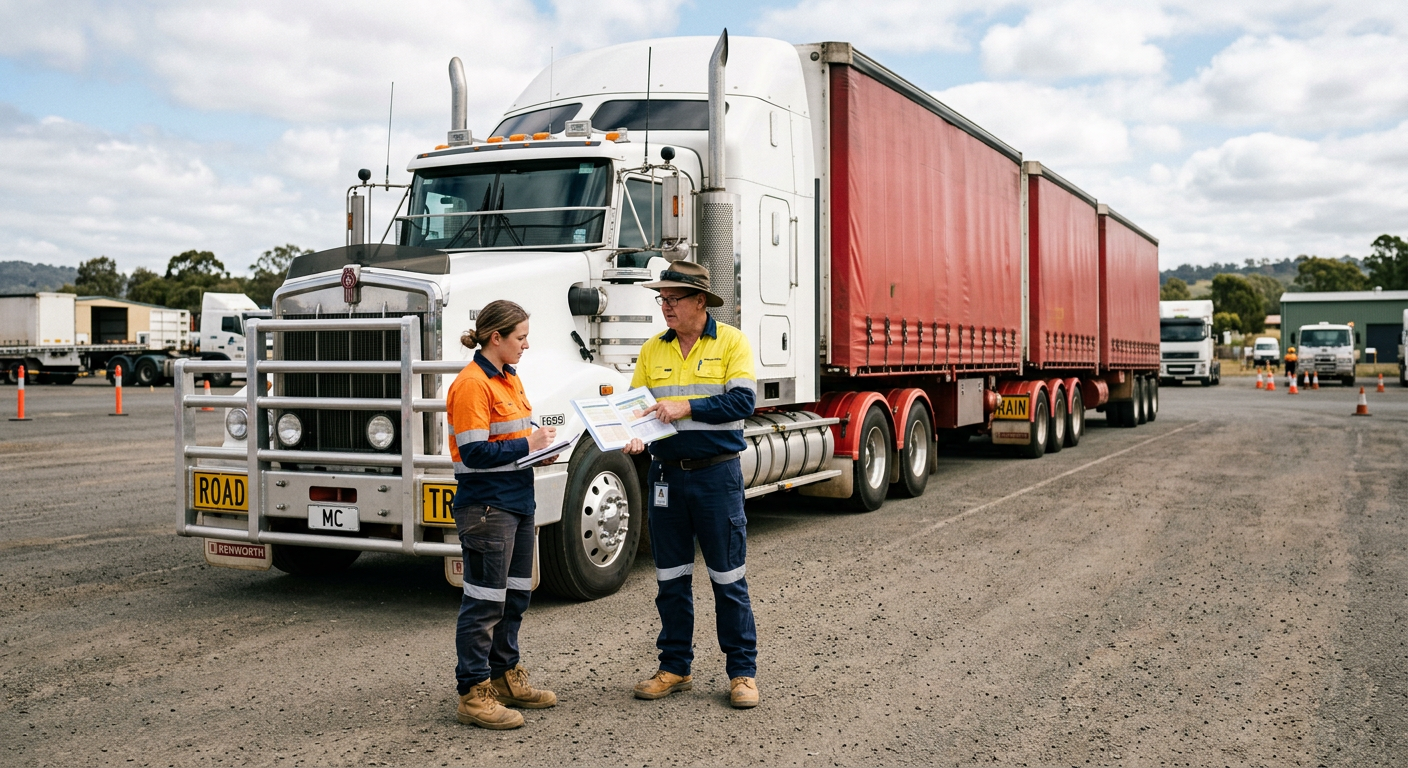
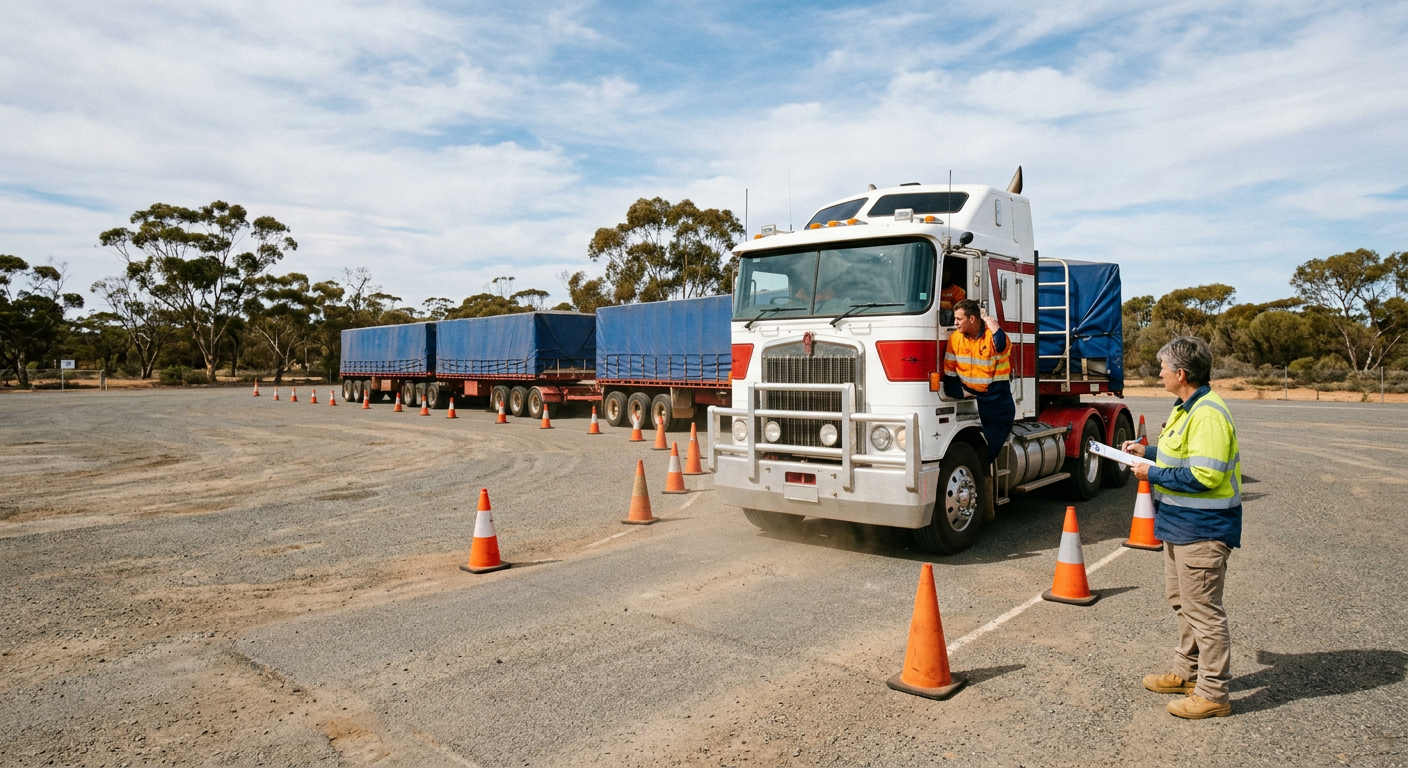
An MC licence allows you to drive a heavy combination unit towing two or more trailers, each with a gross vehicle mass greater than 9,000 kg. The official MC licence requirements explain both the vehicle class and the experience needed to apply for an upgrade.
If you are still deciding which heavy vehicle class is relevant to your work, focus first on the actual vehicle combination. Write down the towing vehicle, the number of trailers and each trailer’s GVM. That description gives the discussion a practical starting point and avoids treating MC as a general label for any large truck.
The Core MC Licence Eligibility Requirements
For a WA MC upgrade, you must have held C class for at least three years and HR or HC for at least one year. The requirement is HR or HC, not both. Medium Rigid (MR) does not satisfy the prior heavy-vehicle class requirement for an MC upgrade.
These are holding periods, so use your licence record when planning. A long career around trucks is not the same information as a recorded HR or HC entitlement. Equally, the date you started with an employer may have little connection with the date you obtained a particular class. Keep employment experience and licence history separate in your preparation.
C Class History: The Three-Year Period
The C class period can be easy to overlook when your attention is on heavy vehicles. Include it in your planning even if you have driven cars for years. Record when you first obtained the class and note any uncertainty about your history, particularly where earlier licences were issued in another jurisdiction.
For example, an applicant with five years of C class history and only six months of HR history has not yet met the one-year heavy-vehicle holding requirement. An applicant with the required C history and more than a year holding HR does not also need a year holding HC. These examples illustrate the two-part rule, not a complete assessment of an individual application.
HR or HC History: The One-Year Requirement
If you have only recently gained HR or HC, use the remaining holding period constructively. Keep developing consistent observation, careful planning and a willingness to respond to feedback. There is no need to treat the next licence anniversary as a deadline for completing MC training; it is a planning milestone within a longer learning process.
Our student information sets out the MC pathway as three years holding C class and one year holding HR or HC. For your own preparation, keep a short record of your current classes, holding dates, expiry date and any restrictions. That gives an enrolment discussion a clear factual foundation.
Interstate and International Licence Holders
If you hold an interstate or international licence and are taking the WA upgrade pathway through our course, you must transfer your licence to WA before sitting the practical driving assessment (PDA). Start organising that step early enough to resolve questions about your current entitlement and how your previous licence history will be recognised.
Already holding a current interstate MC licence is a different situation from upgrading to MC for the first time. A current interstate driver’s licence can be transferred to WA for any vehicle class without a practical driving assessment. Do not assume you need an MC upgrade course simply because you are moving to Western Australia.
When planning an MC upgrade with us at Blue Horse Truck Driver Training, separate your existing entitlement from the class you want to gain. Tell us whether you currently hold HR, HC or MC and where the licence was issued. This keeps the enrolment conversation focused on an upgrade where one is needed, without confusing it with an existing-class transfer.
For an overseas licence or an unusual licence history, take the recognition question to the WA licensing authority before committing to a timetable. Prepare the issuing jurisdiction, current classes and relevant dates. Those details are more useful than a broad description such as “experienced overseas driver”, which does not explain the entitlement you currently hold.
Eyesight, Medical Conditions and Restrictions
You must pass a commercial vehicle eyesight test as part of the RTO eligibility process. If you wear glasses or contact lenses while driving, you must wear them for the test. Bring the correction you normally use and raise any concern about your vision before the practical arrangements are finalised.
Disclose any medical condition, restriction or disability that may affect your training before confirming your booking with us. Relevant examples can include a hearing impairment, dyslexia or an arm or leg injury. Some circumstances may need referral to the licensing authority for approval; disclosure is not, by itself, an automatic refusal of training.
Prepare a factual explanation of how the issue affects you. For an injury, that might mean describing the movement you find difficult; for a learning need, it might mean explaining how you best understand instructions. Avoid trying to decide the outcome yourself. The useful first step is an accurate description that allows your individual circumstances to be considered.
Licence conditions and restrictions also remain important when planning an upgrade. An A restriction limits driving to automatic vehicles, while a B restriction permits automatic or synchromesh transmission. Use the official licence restrictions guidance to understand the codes on your licence, and identify any transmission question before choosing a training pathway.
How Eligibility Is Verified Before Assessment
The RTO must verify eligibility through the Licence Assessment Provider System (LAPS). You must complete and sign the Heavy Vehicle PDA Customer Eligibility form, E114, and pass the commercial eyesight test. These steps turn your initial understanding of eligibility into the formal verification required for training and assessment.
Training and assessment will not proceed if you fail the eyesight test, do not declare your commercial standard medical eligibility, or do not declare an alcohol interlock condition or restriction. Failure to complete the relevant training module also prevents progression. These matters require referral to the licensing authority, not an assumption that a booked assessment can continue regardless.
Eligibility is checked again on the day of the PDA. An expired licence is one reason an assessment will be cancelled. Keep your licence valid throughout the process, and tell us about a change affecting your entitlement before assessment day. An earlier conversation about enrolment does not remove the need to remain eligible when you attend.
Eligibility Is Separate From Being Ready to Learn
A driver can meet the minimum licence-history rule and still benefit from honest reflection before beginning MC training. Readiness is the practical question of whether you can commit attention, time and a learning mindset to the course. Allow space to understand instructions, work through theory and act on feedback without making your timetable unnecessarily pressured.
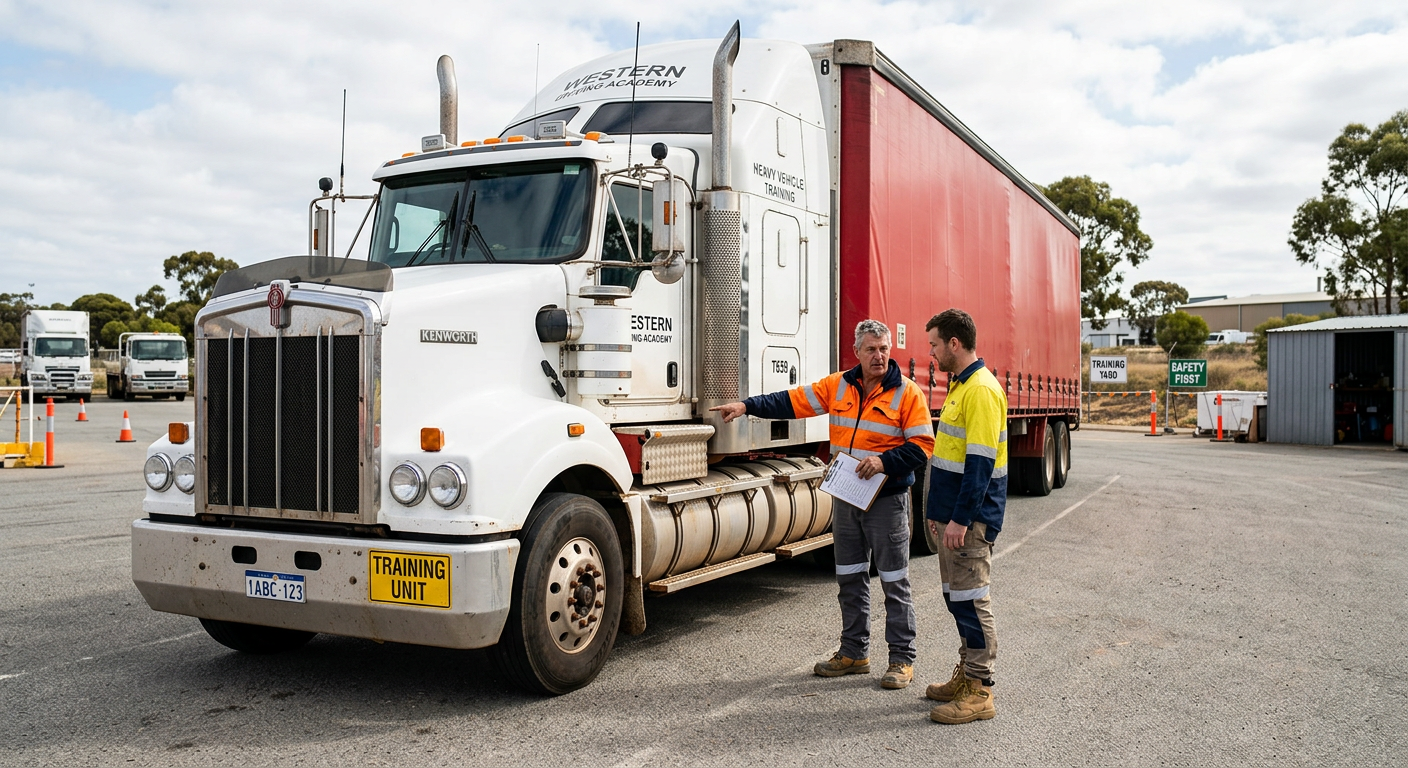
Our MC course covers TLIC4006, Drive Multi-Combination Vehicle, with online theory, practical assessments and two days of one-on-one training with experienced, accredited trainers and assessors. Successful completion of the unit leads to a Statement of Attainment. Once that statement is issued, you can undertake the separate PDA with our DoT-approved assessors.
Use that sequence to organise your preparation. Give the theory proper attention and bring any unresolved learning questions into the training conversation. Course participation, successful unit completion and a licensing assessment are not interchangeable descriptions. Understanding the purpose of each stage helps you prepare for the next task without mistaking attendance for a completed licence upgrade.
Passing the PDA Is Not the Final Licensing Step
MC driving assessments can only be completed through an approved RTO. After passing the PDA, you must visit a licensing service centre or regional agent to have your licence endorsed. You are not authorised to drive under the upgraded heavy-vehicle class until that endorsement step is complete.
For endorsement, you must bring a photocopy of the completed E114 form signed by the RTO, together with proof of identity documents. The official RTO assessment guidance explains this final step. Leave room for it in your plans instead of treating the end of the driving assessment as the moment you can begin MC work.
Taking the Next Step With Confidence
Your immediate task depends on what remains unresolved. A missing holding period calls for a realistic future date. A transfer question calls for clarity about your existing entitlement. An eyesight, medical or restriction issue needs individual attention. Deal with that specific gap before arranging practical commitments, while keeping your longer-term MC goal in view.
To begin an MC enrolment discussion, get in touch and tell us which eligibility milestone you have reached and what remains outstanding. Include your current licence class, its issuing jurisdiction and the relevant holding dates, plus any training-related condition you need to disclose. We can then discuss your course preparation without losing sight of the separate licensing steps.




Leave A Comment