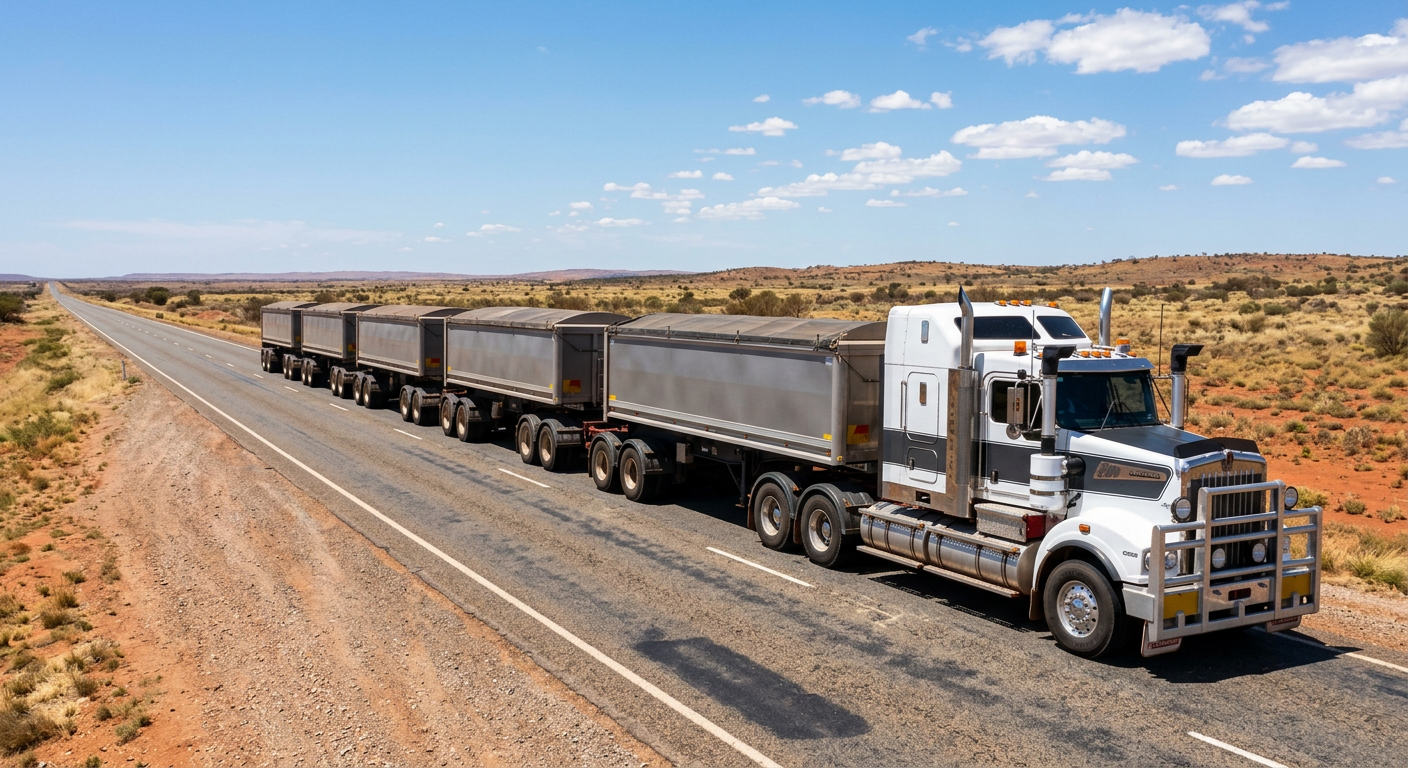
An MC licence sits at the top of the Australian heavy-vehicle licence classes. That matters because the question is not simply whether a truck looks large enough to need an MC qualification. The useful starting point is the combination being driven: the towing vehicle, the trailer arrangement and the gross vehicle mass ratings that apply.
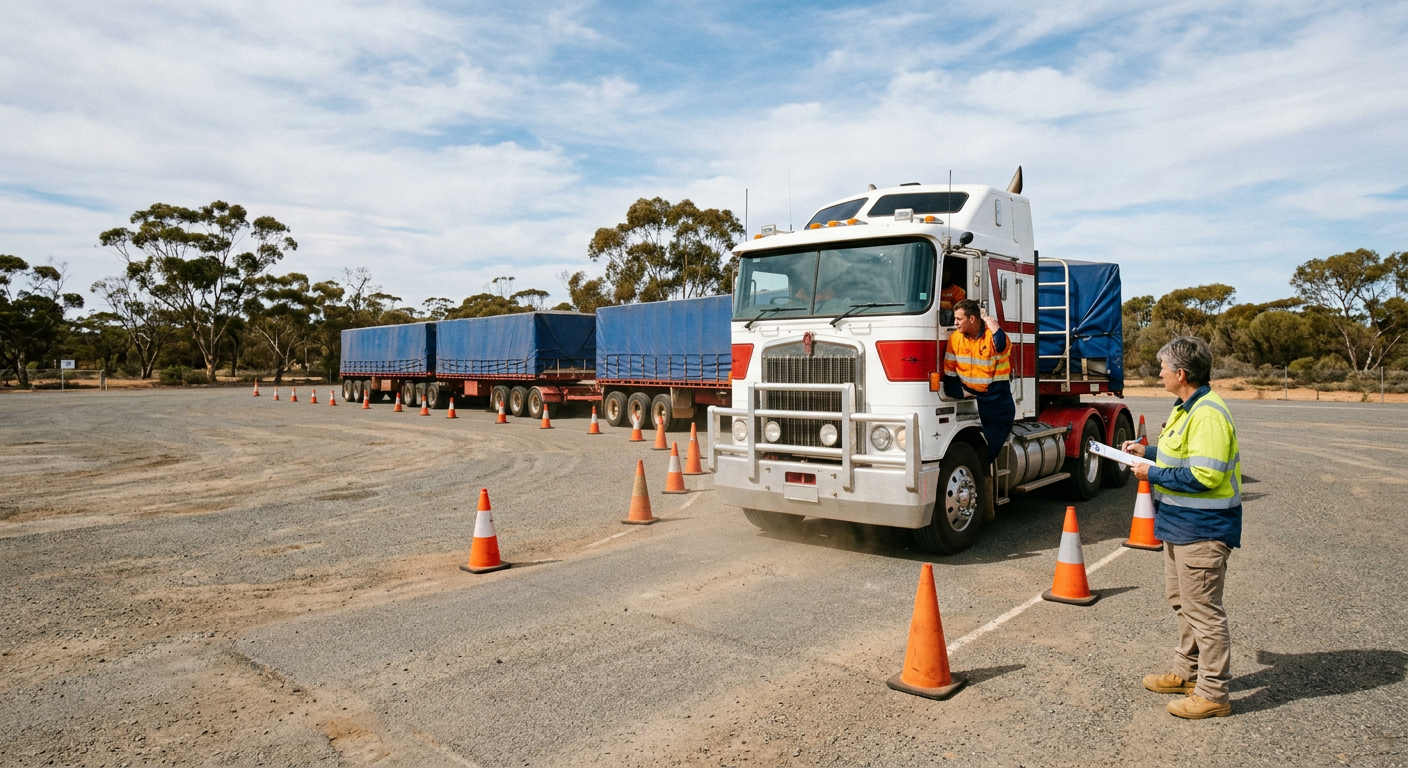
If you are wondering what you can drive with an MC licence in Western Australia, the central entitlement is a heavy combination unit towing two or more trailers, each with a gross vehicle mass (GVM) greater than 9,000 kg. MC also includes specified lower-class vehicles. It is therefore broader than a licence used only when a second large trailer is connected.
A description such as “combination work” leaves too much unresolved to explain why a particular licence class suits a role. A more useful comparison distinguishes the basic single-semi-trailer arrangement from combinations with additional trailers. The difference becomes clearer when the trailer ratings are included, as the HC allowances below demonstrate.
The distinction between vehicle class and individual driving entitlement matters too. An MC class does not erase transmission restrictions or licence conditions. Reading the class alongside those details gives a more useful answer than treating MC as unrestricted permission to drive anything with multiple trailers.
The Official MC Class in Plain Language
The WA MC guidance defines the class around a heavy combination unit towing two or more trailers, each exceeding 9,000 kg GVM. Both parts matter: the number of trailers and the mass threshold applying to each one. Counting trailers without considering their ratings can lead to the wrong conclusion.
The 9,000 kg GVM threshold applies to each trailer in that definition. For the purpose of comparing the combination with the class wording, use its stated GVM details, not a visual impression of the freight. A photograph of an empty trailer does not supply the rating needed to apply the definition.
The wording “greater than” also matters at the boundary. A trailer rated at exactly 9,000 kg does not exceed 9,000 kg. Keeping that distinction clear makes the comparison with HC’s additional-trailer allowance easier to understand: an extra trailer is not necessarily an extra trailer above the MC threshold.
MC Includes HC Vehicles and Lower Classes
An MC licence also covers the HC vehicle-and-trailer entitlement described in WA’s class guidance, including an attached trailer exceeding 9,000 kg GVM. A driver holding MC does not need a separate HC class to drive a vehicle within that included entitlement, subject to the restrictions and conditions on their licence.
A prime mover with an attached single semi-trailer falls within HC scope. So does an HR vehicle with an attached trailer over 9,000 kg GVM. These examples help separate the familiar appearance of a large articulated truck from the specific multi-trailer configuration that defines the central MC entitlement.
Why Two Trailers Do Not Always Mean MC
HC can also permit one additional trailer with a maximum GVM of 9,000 kg, or an unladen converter dolly or low loader dolly. That is why “two trailers means MC” is not an accurate rule. The HC class guidance explains these allowances alongside its basic vehicle entitlement.
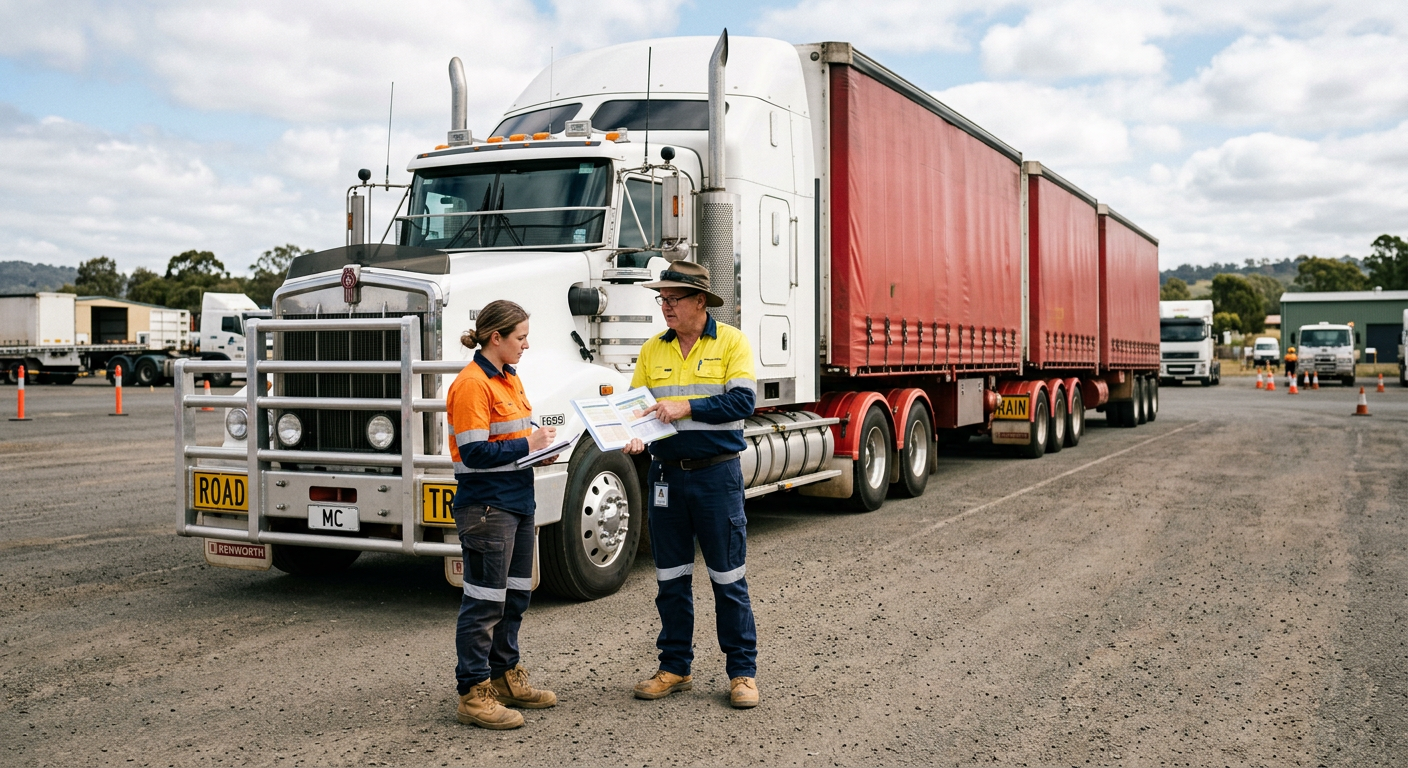
Consider the difference between a qualifying heavy combination towing an additional trailer rated at 9,000 kg and a heavy combination towing two trailers each rated above 9,000 kg. The first may fit HC’s additional-trailer allowance; the second matches the defining MC configuration. The boundary depends on the actual arrangement and ratings, not simply the presence of a second trailer.
The Lower Classes Included With MC
WA’s MC guidance also lists HR, MR and LR vehicles, cars and mopeds within the entitlement. This is more precise than saying MC covers every vehicle. The listed scope includes those lower classes, but it is not a statement that every other vehicle category or personal restriction disappears.
That breadth is useful when thinking about a role involving more than one vehicle type. The question is not whether every shift uses the largest combination the class covers. It is whether the vehicles involved sit within your entitlement and whether your individual restrictions suit the equipment you will drive.
Connecting Vehicle Scope With Your Training
Our MC training at Blue Horse Truck Driver Training combines online theory and practical assessments for TLIC4006 Drive Multi-Combination Vehicle. Successful completion of the unit leads to a Statement of Attainment. This records completion of the training unit; it is not the endorsed MC driving licence. The licensing assessment and endorsement stages follow separately.
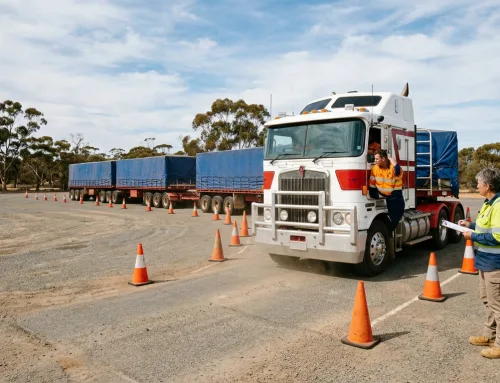
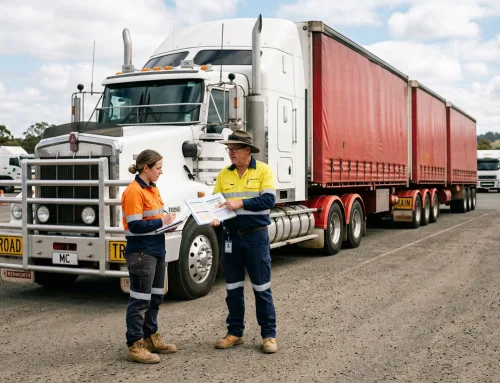
Our MC course includes two-day, one-on-one training with experienced, accredited trainers/assessors. Individual instruction gives our trainers the opportunity to focus on correct driving techniques while you concentrate on the task at hand. Attendance alone is not a promise of a licence upgrade.
After successful completion of the unit and issuance of the Statement of Attainment, you can proceed to the Department of Transport Practical Driving Assessment with our DoT-approved assessors, subject to eligibility. The unit assessment and the licensing PDA are distinct milestones. Keeping them separate helps you understand what has been completed and what remains before the licence is endorsed.
WA requires MC driver assessments to be completed through an approved registered training organisation. During heavy-vehicle PDAs, approved RTOs must use in-cabin video, audio recording and GPS surveillance. You must sign the camera acknowledgement on Form E114, and you can request to view your recorded PDA by contacting the RTO. These recording arrangements are worth understanding before assessment day so you know what the acknowledgement covers and how to access the recording afterwards.
Transmission Restrictions Still Matter
An A restriction limits the holder to automatic vehicles. A B restriction limits the holder to automatic or synchromesh vehicles. These restrictions can affect whether a particular truck is suitable even when its vehicle class is within MC scope. A higher class and an unrestricted gearbox entitlement are different things.
The licence restriction guidance sets out separate assessment requirements for removing A and B restrictions. Removing A requires a PDA in a manual vehicle; removing B requires a PDA in a vehicle with a non-synchromesh gearbox. An MC upgrade should not be described as automatically removing either restriction.
From Training to an Endorsed Licence
For an MC upgrade in WA, the experience requirements are a C class licence held for at least three years and an HR or HC licence held for at least one year. An MR licence alone does not meet that heavy-vehicle holding requirement. Use these official requirements when deciding whether MC is the next available step in your licence progression.
Before training or a PDA, the RTO must verify eligibility through the Licence Assessment Provider System. The process includes completing and signing Form E114 and passing a commercial vehicle eyesight test.
Passing the PDA is not the final administrative step. You must visit a DTMI service centre or regional agent to have the licence endorsed before driving under the new heavy-vehicle entitlement. The RTO assessment guidance also specifies the signed E114 copy and proof of identity documents to bring.
A useful way to organise your preparation is to keep three records together: the intended vehicle specification, your licence history and conditions, and the training or assessment documents relevant to your stage.
Put the MC Entitlement to Practical Use
The Multi-Combination licence answers a vehicle-class question. Its defining configuration is a heavy combination unit towing two or more trailers, each over 9,000 kg GVM, with the listed HC and lower-class entitlements included. Read that as the scope of the driving class, not as separate approval for a particular road, length, weight or operator accreditation.
An enquiry about “two trailers” can leave the central licence question unanswered. To explore where your intended combination fits, speak with us about its trailer ratings and intended gearbox, so we can discuss the MC training you are considering against a specific vehicle arrangement.
Leave A Comment