
MC licence training brings knowledge and practical driving together, but they do different jobs. Our course includes online theory and practical assessments for TLIC4006 Drive Multi-combination Vehicle, alongside two days of one-on-one training. Understanding those learning functions helps you prepare without confusing course completion with the separate steps needed to upgrade your licence.
Theory is the place to develop your understanding; practical work is where you apply it in the vehicle. Treating the course as one undifferentiated block can make preparation harder than it needs to be. A more useful approach is to give the knowledge work proper attention and arrive for driving instruction ready to connect ideas with actions.
Successfully completing the unit and receiving your Statement of Attainment makes you eligible to undertake the Department of Transport Practical Driving Assessment, or PDA, with our DoT-approved assessors. The Statement of Attainment and the PDA therefore serve different purposes. Completing online work alone does not complete the unit or authorise you to drive an MC vehicle.
Use that distinction when organising your learning. Allow time for concentrated study, practical attendance and the licensing steps that follow assessment. Keep the instructions for your enrolment together so that an unfinished learning task or an overlooked arrangement does not compete with your attention when it is time to work in the vehicle.
What MC Online Theory Is For
Our MC course requires successful completion of both online theory and practical assessments to obtain the TLIC4006 Statement of Attainment. Online describes the delivery of the theory component, not a replacement for practical competence. Reading about a driving task and demonstrating it are related activities, but success in one does not establish success in the other.
For the learner, the value is not simply convenience. Approach the material in a setting that supports concentration and deliberate review. Set aside time when you can pay attention, keep distractions away and make brief notes about concepts you want to understand more clearly. Treat the work as part of your training, not as promotional reading about the course.
A useful study note explains an idea in your own words. You might record what a concept means, why it matters to a driving decision and which part remains unclear. This gives an uncertainty a precise shape. It is easier to discuss a specific point than to arrive with a general feeling that a whole subject is confusing.
Plan study around the instructions supplied for your enrolment. Do not build your schedule on an assumed question count, a guessed completion time or another learner’s experience. Give yourself room to work carefully. The objective is to understand the material well enough to use it, not simply to reach the end while retaining as little as possible.
Moving From Understanding to Application
Completing knowledge work with care can make the practical phase easier to approach with a clear head. Instead of dividing your attention between unresolved study and the upcoming vehicle session, aim to arrive ready to listen and apply what you have learned. That is preparation advice, not a promise that practical driving will feel easy or familiar immediately.
While driving, keep your attention on the trainer’s directions. Use the practical session to connect your understanding with the task being taught and the feedback you receive.
What One-to-One On-Road Training Changes
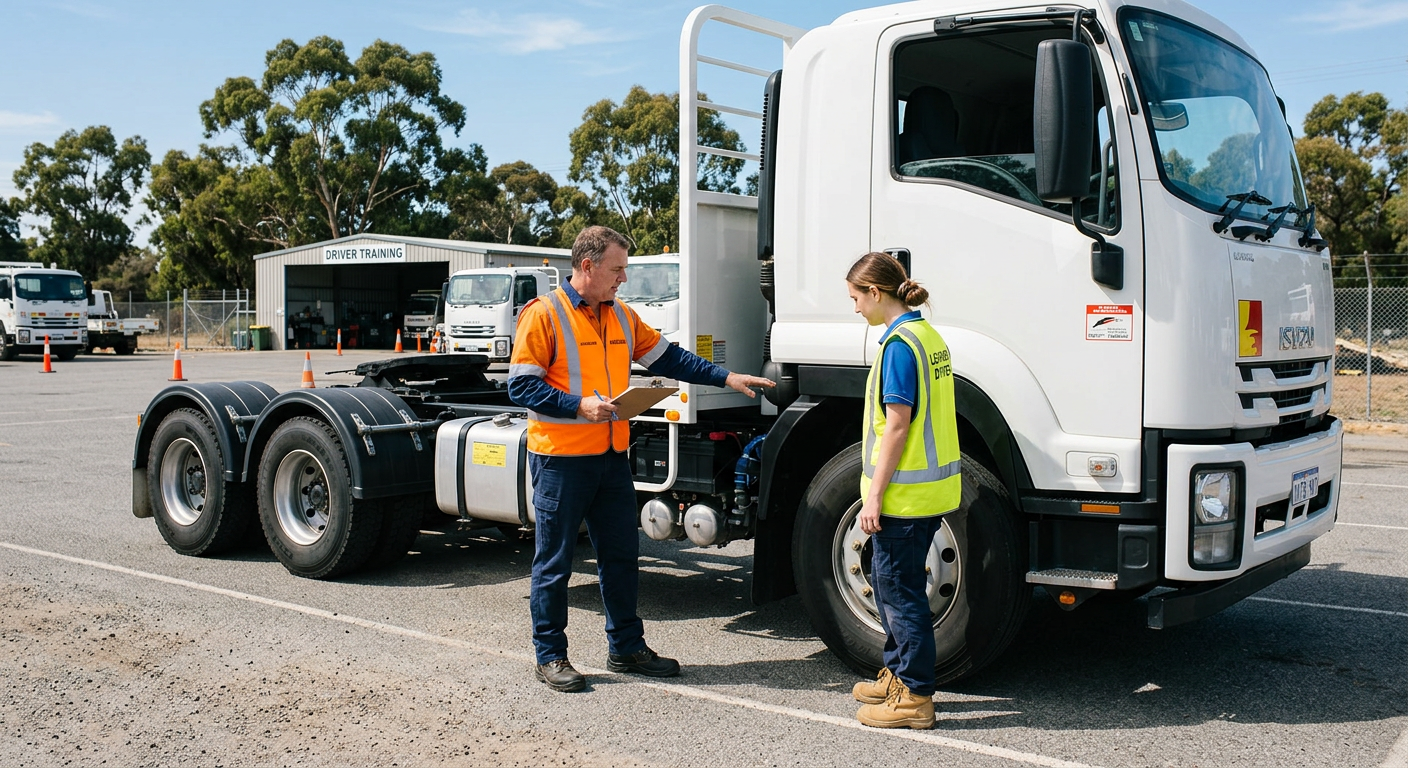
Our practical training is delivered one-on-one. That individual format allows our trainers to focus on correct driving techniques while you concentrate on the task at hand. It also gives the learning conversation a clear subject: your driving, your response to instruction and the areas that need further attention, without turning the session into a comparison with other learners.
One-to-one instruction is most useful when you take an active part in learning. Listen to the direction, think about what you are being asked to do and use feedback to identify a specific adjustment. Avoid treating a correction as a personal verdict. The productive question is what to change in your next attempt, not whether receiving feedback means you have failed as a learner.
We deliver our MC training at Blue Horse Truck Driver Training through a two-day, one-on-one format with experienced, accredited trainers and assessors. Use that individual attention to connect knowledge with driving practice. Arrive ready to explain an uncertainty clearly, listen to the response and concentrate on the task being taught, instead of trying to anticipate the entire course at once.
What Changes When You Are in the Vehicle
The shift from study to driving matters because understanding an explanation is different from making a decision while operating a vehicle. For example, recognising why observation matters is not the same as consistently using observation to inform your actions. Treat that gap as the work of practical learning, not as evidence that the theory was unnecessary.
A useful learning habit is to separate the instruction, your action and the feedback. Consider what you were asked to do, what you actually did and what needs to improve. This gives you a concrete point to carry forward. Broad judgements such as “that went badly” offer much less direction than identifying the particular decision or technique that needs attention.
How the Two-Day Course Fits Together
Our MC pricing sets out a 10-hour course with eight hours of on-road training, divided into 5.5 hours on day one and 2.5 hours on day two. That is a more useful planning reference than assuming that “two days” means two full working days behind the wheel. Keep the course duration and the stated driving-training hours distinct.
When comparing course pricing, our listed MC course price is $2,490 on weekdays and $3,100 for weekends or public holidays. Budget using the option that matches your intended attendance.
Organise your other commitments so you can give the practical sessions your attention. Avoid planning work or travel so tightly around training that a minor disruption leaves you rushed. Use your enrolment arrangements for attendance details, and keep preparation practical: know where you need to be, have the requested documents ready and leave enough time to arrive composed.
Unit Assessment and the PDA Are Different Milestones
Training is the instructional part: you receive guidance and work on the required skills. Assessment requires you to demonstrate competence. For our MC pathway, successful completion of TLIC4006 and issuance of the Statement of Attainment come before eligibility to undertake the PDA. These milestones are connected, but they should not be collapsed into a single assumption that attending training automatically produces a licence upgrade.
Under WA’s MC requirements, you must complete and pass a practical driving assessment conducted by an approved registered training organisation. MC assessments are not an online-only licensing pathway. The knowledge component supports your preparation, while the practical assessment is a separate requirement for obtaining the licence class.
Keep the purpose of each activity clear as you learn. During instruction, concentrate on understanding and improving the task. When discussing assessment, focus on what you must demonstrate and the arrangements that apply. This avoids a common planning mistake: treating a scheduled assessment as an assured result, instead of a formal opportunity to demonstrate the required competence.
Passing the PDA Is Not the Final Administrative Step
After passing the PDA, you must visit a DTMI service centre or regional agent to have your licence endorsed. You are not authorised to drive the upgraded heavy vehicle class until that step is complete. The RTO assessment guidance requires a photocopy of the completed Form E114 signed by the RTO, together with proof of identity documents.
Build that final visit into your upgrade planning. A Statement of Attainment records successful unit completion; the PDA establishes the practical assessment outcome; endorsement completes the licensing step described above. Keeping those purposes separate makes it easier to understand what has been achieved and what still remains, particularly if you are discussing a possible start date for driving work.
A Clear Way to Prepare for MC Training
Use three preparation priorities: give the online theory concentrated study time, arrive ready to learn during practical instruction and keep the assessment and endorsement milestones distinct. Our student information brings together the student handbook, course policies and fees information. Read the relevant material alongside your enrolment instructions so your preparation covers both learning and attendance responsibilities.
For help connecting your MC online theory with the practical stage, speak with us about how to prepare for the move from study to driving instruction.







Leave A Comment