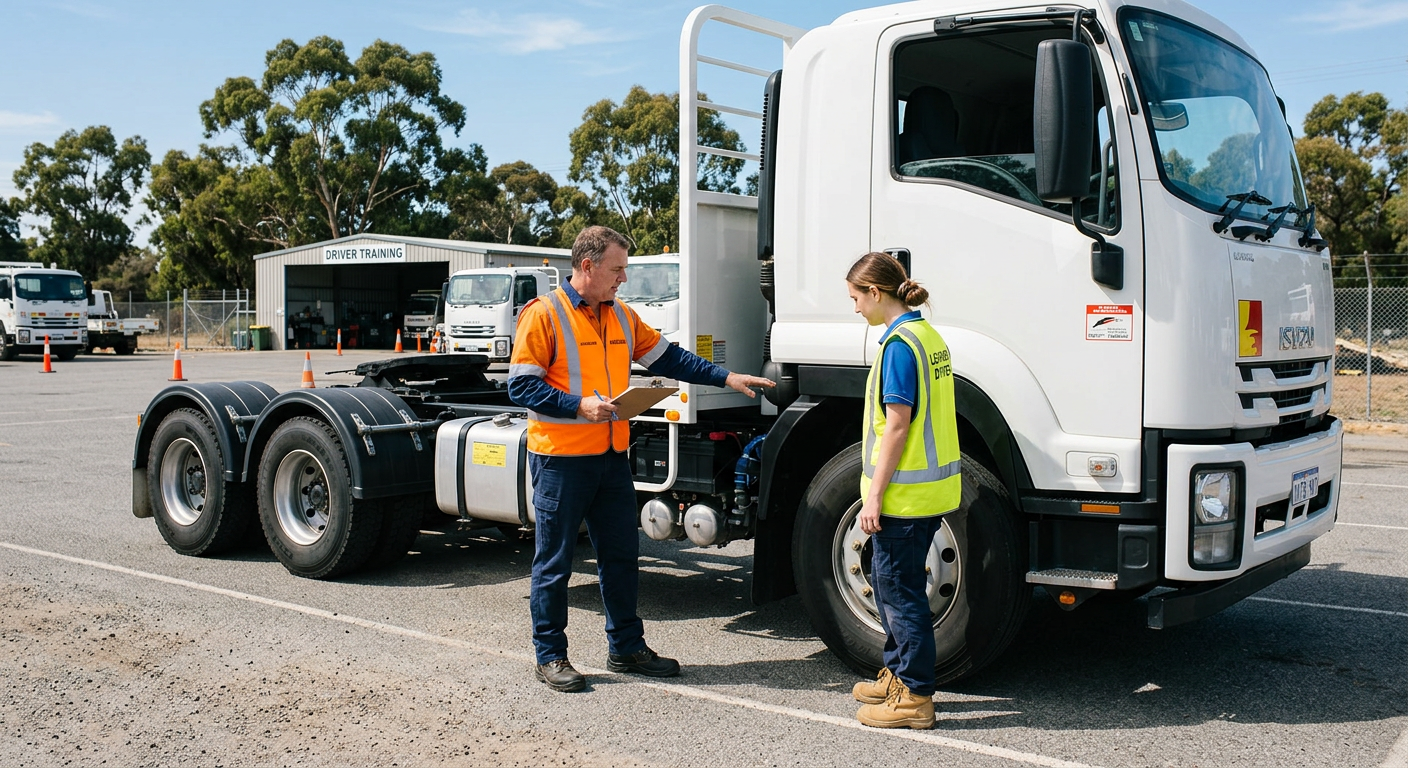
For the learner preparing for an HR course, the useful question is not whether a course sounds difficult. It is what the named unit covers and how that fits the heavy rigid vehicle you plan to drive. Our HR course covers TLIC3004 Drive heavy rigid vehicles. The unit brings together vehicle control, traffic observation and vehicle performance, giving you a practical way to understand the learning ahead.
HR truck training skills extend beyond steering and changing gears. The unit includes starting, manoeuvring, positioning and stopping the vehicle, managing engine power and braking, reversing, parking and responding to hazards. These tasks belong together: positioning a truck accurately is only one part of operating it while maintaining awareness of the surrounding road environment.
An HR course is not a generic promise that every heavy vehicle configuration will be covered. The national unit describes the skills and knowledge for heavy rigid driving, while WA licensing requirements determine the pathway to the relevant licence. Keeping those roles distinct helps you understand both what you will learn and the separate steps involved in obtaining driving authority.
Begin With the Heavy Rigid Class
An HR class vehicle licence permits a heavy rigid vehicle with three or more axles and a gross vehicle mass (GVM) greater than 8,000 kg. It also permits towing a trailer with a maximum GVM of 9,000 kg. Those boundaries help you identify the intended vehicle before concentrating on technique. A large vehicle is not automatically an HR vehicle; its configuration, axle count and GVM matter.
Our HR training options cover automatic, synchromesh and Road Ranger transmissions. The class question comes first, followed by the gearbox category in the truck you intend to operate. A useful starting description names both, such as an HR vehicle with a synchromesh gearbox. This is more informative for course planning than simply saying you want to learn to drive a truck.
Understand the Vehicle Control Skills
Starting, Steering and Positioning
The TLIC3004 unit requires the vehicle to be started, steered, manoeuvred, positioned and stopped in accordance with traffic regulations and manufacturer instructions. This gives ordinary driving actions a clear standard: the task is not merely to make the truck move, but to operate it appropriately for the vehicle and the road rules. For preparation, think about these actions as connected parts of a driving task, not isolated tricks to memorise.
Engine management is another explicit part of the unit. It covers using engine power efficiently while minimising engine and gear damage, and maintaining operation within the manufacturer’s specified torque range and temperature through suitable gear selection and smooth changes. The learning focus is therefore the relationship between the engine, gearbox and vehicle performance. Knowing a gear pattern alone does not explain how the unit expects that gearbox to be used.
Braking is also a vehicle-control skill in its own right. The criteria require the braking system to be managed and operated for effective control under all conditions. Read this alongside the starting, steering and positioning requirements: stopping is part of the whole driving task, not an action considered only at the end. Your preparation can focus on understanding the purpose of each control without trying to teach yourself an unsupported operating procedure.
Reversing, Parking and Hazards
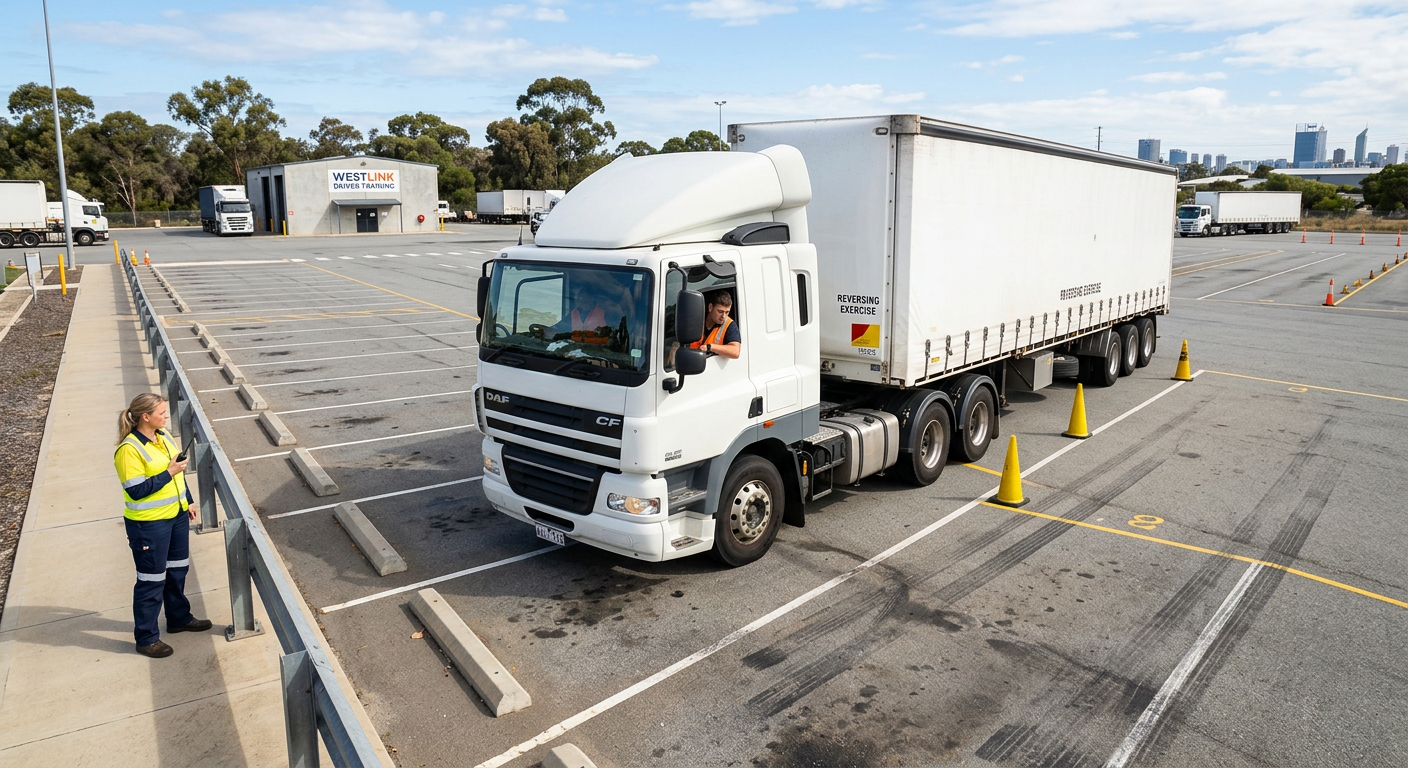
Reversing has its own requirement: maintaining visibility and achieving accurate positioning. That is a more useful learning target than simply getting the vehicle backwards into a space. It brings observation and placement together. The unit also covers parking, shutting down and securing the vehicle in accordance with manufacturer specifications, traffic regulations and workplace procedures, so the driving task continues beyond arriving at the destination.
Hazard management includes identifying or anticipating hazards and avoiding or controlling them through defensive driving. Appropriate procedures in a driving emergency are also included. Managing hazardous situations does not mean a driver can predict every event. It means hazards are part of the learning task throughout vehicle operation, with attention to both developing risks and the response required when something goes wrong.
The unit also includes completing and submitting overwidth and overweight permit applications where required by the relevant regulations. This is a conditional requirement, not a statement that every HR journey needs a permit. Together, these criteria show why the unit is broader than a collection of steering and gearbox exercises: it connects operating the vehicle with the rules and procedures relevant to its use.
Connect Traffic Awareness With Vehicle Performance
In our HR training at Blue Horse Truck Driver Training, we bring together safe driving techniques, systematic control of vehicle functions, traffic observation, vehicle performance and responses to hazardous situations. For you as a learner, the useful connection is between the truck and its surroundings. Treating those subjects together gives practical preparation a clearer purpose than concentrating on a single control while overlooking the developing traffic picture.
The unit requires traffic and road conditions to be monitored continually and acted on for safe operation. It also addresses route efficiency through anticipating traffic flows, road standards and factors likely to cause delays or deviations. Route choice is therefore part of the learning, not merely background information before the driving begins. A useful way to approach this is to consider both where you are going and how changing conditions affect that journey.
Inspections, Reporting and Records
Vehicle performance begins with pre-operational inspections and vehicle checks, then continues through monitoring performance and efficiency during use. Managing vehicle condition is not a claim that a learner will repair or certify a truck. The emphasis here is on recognising that vehicle condition matters before departure and remains relevant while driving. The unit does not reduce this responsibility to a universal inspection sequence or a fixed number of checks.
Defective or irregular performance and malfunctions must be reported to the appropriate authority, and vehicle records must be maintained or updated in accordance with workplace procedures. This connects noticing a problem with communicating and recording it. For a learner, it is helpful to distinguish those responsibilities: observing something unusual, reporting it appropriately and completing the relevant records are related tasks, but they are not interchangeable.
Choose the Transmission That Fits Your Goal
Our HR-A option is for automatic HR vehicles, HR-B covers automatic and synchromesh HR vehicles, and Road Ranger/Open covers automatic, synchromesh and crash-box, double-clutch HR transmissions. These distinctions explain why “manual” is not always a precise enough description. Identify the transmission in the vehicle you expect to drive so that your training goal refers to the appropriate gearbox category, not just a familiar label.
The official licence restrictions guidance identifies A as automatic only and B as automatic or synchromesh only. These are restrictions on the vehicle types a holder may drive. Keep that licensing distinction separate from learning a particular control: practising a gearbox skill and holding the authority to use that transmission are different matters.
Automatic training does not remove the wider heavy-vehicle task. Steering, positioning, braking, traffic monitoring and managing vehicle condition remain part of the unit’s scope. The transmission changes the gearbox work, but it does not replace those other responsibilities. This is why the best preparation connects your intended gearbox with the complete driving task instead of treating transmission choice as a measure of everything the course involves.
Separate Unit Completion From the WA Licence Pathway
Our course includes online theory and practical assessments for TLIC3004, with a Statement of Attainment issued on successful completion. We also provide one-on-one training with accredited trainer/assessors. Successful unit completion and issuance of the Statement of Attainment precede eligibility to undertake the Department of Transport Practical Driving Assessment (PDA) with our DoT-approved assessors. The unit work and the licensing assessment are distinct milestones.
The performance criteria explained above describe the national unit; they are not an exact scored PDA rubric. Use them to understand the skills being developed, not to invent a test marking sheet. Likewise, the national unit publication does not replace WA eligibility requirements. Transport WA requires applicants not to be provisional licence holders and to have held a C class licence for at least two years, or an LR or MR licence for at least one year.
The official RTO assessment guidance also requires eligibility verification, a completed and signed Heavy Vehicle PDA Customer Eligibility form and a commercial vehicle eyesight test. After passing the PDA, you must visit a DTMI service centre or regional agent to have your licence endorsed before you are authorised to drive the heavy vehicle. A successful assessment is therefore not the final administrative step.
Turn the Unit Into Useful Preparation
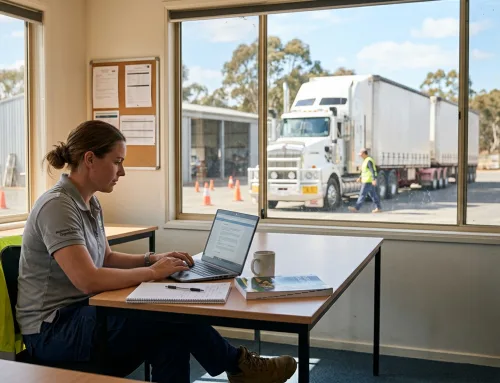
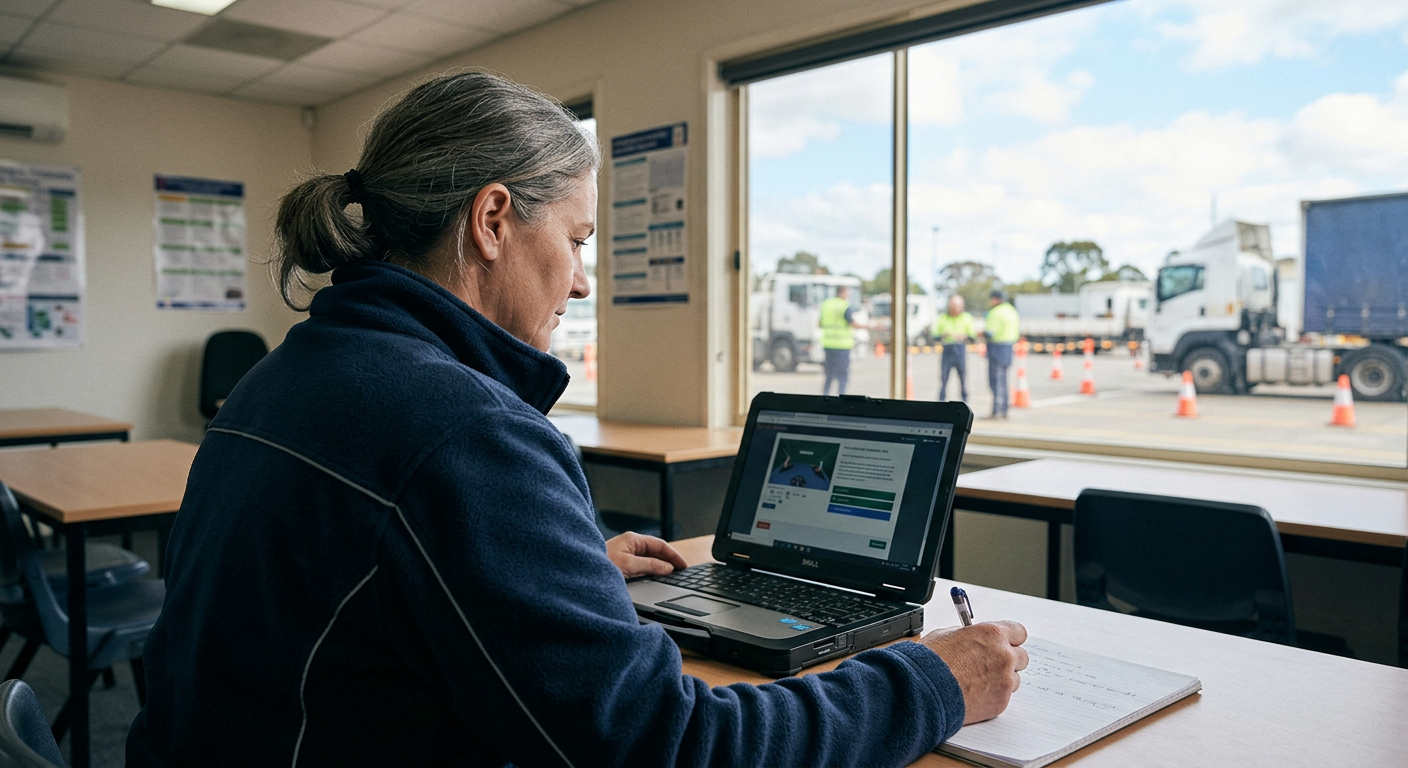
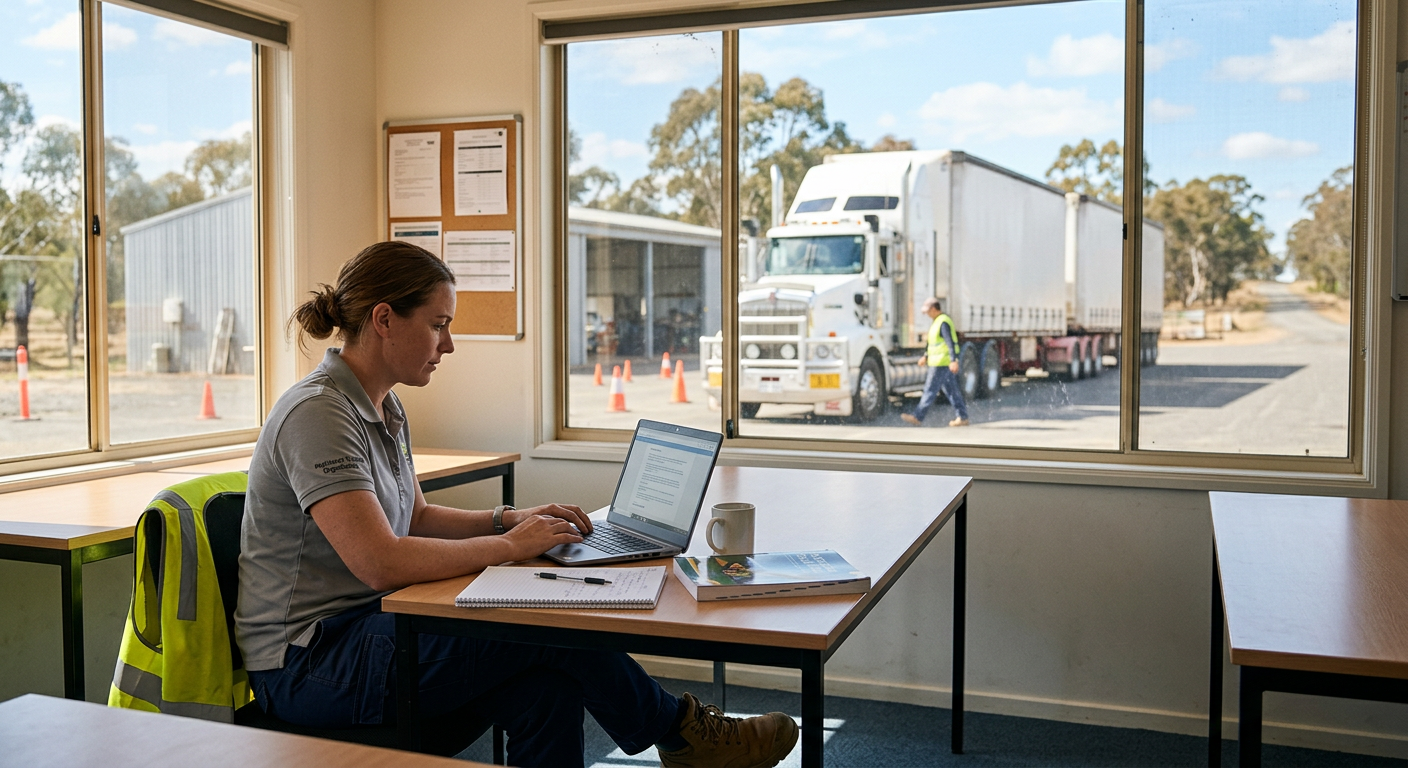
Before practical training, organise your notes around vehicle control, traffic and road conditions, and vehicle performance. Under each, write down the part you least understand: perhaps the relationship between gear selection and engine operation, maintaining visibility while reversing, or reporting irregular vehicle behaviour. This is a reading aid, not an assessment checklist. It gives your preparation a learning focus without pretending that reading can replace instruction.
Our student information brings together the student handbook, course policies and frequently asked questions. Use it for the participation side of your preparation while keeping your skills notes tied to TLIC3004. The result is a clearer learning brief: the correct vehicle class, the intended transmission and a specific skill you want explained. You do not need to arrive with every answer, but it helps to know where your uncertainty lies.
Choose one driving task from the unit and put your uncertainty into a plain-language question, such as how engine performance relates to gear selection or what accurate positioning means during reversing. Then speak with us about that skill and how it fits your HR learning goals. Starting with a real learning question makes the discussion useful before you begin practical training.


Leave A Comment